I know it's cliche to do a Thanksgiving post on a blog, but it's my blog and I'm a sentimental fellow so here goes!
2014 has been a tough year for me and my family...not tough in a bad way but in terms of a lot of change, some bad but mostly good. I'm definitely taking a little bit of extra time this Thanksgiving to reflect and be thankful for all of God's blessings on us. I've got a wonderful wife who has been with me every step of the way and who is the true backbone of our family, we've got four amazing children who bring us so much joy, we've got families that are loving and supportive, and we've got friends old and new who enrich our lives. I'm thankful to finally have a stable job, where I'm really happy and excited on what I'm working on, and I'm thankful to live in such a great country with all of its freedoms and rights. Finally, on a blog-related note, I'm thankful for all of the great opportunities that have opened up because of my writing on this sight, all of the great people I've met online through blogging and writing, and for all of my loyal readers who have made The Rock and Roll Chemist the popular and successful site it is today.
So sit down today with family and friends, enjoy your meal, watch some football, relax, visit, and take a little time to reflect on the good things, the things you have to be thankful for in your life. It's too easy, especially in today's fast-paced world, to lose sight of what's really important and not count your blessings. Try to keep from falling into that trap and instead count your blessings...you'll be glad you did.
As someone who has been obsessed with the Beatles for basically my entire life, I've stuffed every scrap of information about them that I possibly can into my head. The number of books, magazines, websites, movies, television shows, and interviews I've consumed has led to a vast knowledge of Beatles facts, ranging from the valuable to the obscure. As such, there's always the danger when I read a new book about them that it's going to fall short. There have been so many books written about them over the past fifty-plus years that it has become a full-time exercise in sorting the wheat from the chaff in order to find the worthwhile books. When I first heard of the new book, The Beatles Through Headphones, it seemed like an interesting take on the music that has been dissected and written about innumerable times. Whether or not this ends up being a worthwhile entry to the library of Beatles books will be the focus of this review.
***special thanks to Beth at McFarland for sending me a copy of the book to review!***
The concept is simple: the Beatles' music sounds better through headphones and has loads of sonic delights and nuances that are missed when listened to through conventional speakers. This is something every Beatles fans know, but there are still new things to discover with each listen (I say this as someone who still finds new things 30 years later). Author Ted Montgomery went through each and every Beatles song and documented any aural nuances. The book is laid out in a straightforward manner, running chronologically through the albums from the beginning of their career in 1962 through to the end in 1970. Both stereo and mono versions of the albums are looked at. However, what seemed like it would be a fun and perhaps enlightening read turned into something a lot more frustrating for me.
The entries for each song include a short review by the author followed by a rundown of any nuances, including at which point during the running time each one occurs. I'll go through my criticisms sequentially, but I'll warn you right now that there are several. First, and this is unfair to the author, but since I'm someone who has listened to, analyzed, dissected, and studied the Beatles and their music for years, the simple fact of the matter is that I didn't really find much, if anything, in this book that I didn't already know. In fact, to the contrary, I found a LOT of mistakes and flat out wrong information contained within. Again, this is partly a result of knowing so much of the minutiae when it comes to the Beatles' music, but it still made for a very frustrating read. I had no problem with the author's opinions on the songs...whether I agreed or disagreed with him, I respect his opinions and understand no two people will like and dislike the same songs. It's the errors and inaccuracies contained in much of what he wrote, both as background to the songs as well as the specific bits he's pointing out as the selling point of the book, that were so maddening for me. At the risk of inundating you with a huge list of the inaccuracies I've found, I've included only a partial list, which included the following errors:
-Numerous errors in personnel and attributions (for example, saying that George says "bye!" prior to "Sgt. Pepper's Lonely Hearts Club Band (reprise)" when it's John). -No mention of George's cough in "Norwegian Wood" which seems like an obvious one to include
-Wrong about the percussion on "Blackbird" (it's Paul's footsteps, clearly seen/heard in this video)
-Wrong about personnel on "I Will" (John does play on it, contrary to the author's claim)
-Wrong about sound at the end of "Long Long Long" (it's a wine glass atop the amp that vibrates...the author claims it's a siren)
-Wrong about Abbey Road being the only Beatles album without band's name on the cover (Rubber Soul and Revolver also had no band name on their covers)
-Wrong about personnel for harmony vocals on "The Inner Light" (it's John and Paul joining George) -Wrong about introduction of "Let It Be" on the album of the same name (claims it's Paul, it's really John)
-Wrong about "Leave My Kitten Alone" being originally intended for the Help! album (it was intended for Beatles For Sale)
-Wrong about "A Beginning" being intended as an introduction for the White Album or for "Good Night" (it was intended as the introduction to "Don't Pass Me By")
-Wrong about "What's the New Mary Jane?" not being every considered for a Beatles album (it made the final track list for the White Album before the band cut it at the last moment before mixing)
-Wrong about ukulele at end of free as a bird being played by John (it was George)
As you can see, many of my criticisms are very nitpicky, which I readily admit. However, if one is going to claim to be an expert on the Beatles and write a book that wants to be included in the discussion along with more essential books like those by Mark Lewisohn, Ian MacDonald, and others, then these mistakes are inexcusable, not least because this is all readily available information that can be found on countless websites and books (many of which are cited by the author himself in his bibliography!). My final criticism has to do with the author's writing style, which grated after a while. Some of this was because of the use of descriptive words that didn't make sense or were too strong or weak for the message they were trying to convey. For example, calling a very simple part in a song "superlative" when describing something as minor as background percussion. This leads to a deeper irritation, which is that it seemed the author didn't quite know as much about music as he was trying to convey, and it showed. Maybe this is me being snobby (I did admit to this, remember?) but it got so irritating by the end of the book that I was thankful once I'd finished reading it. That's not to say that there was nothing enjoyable about the book. Many of the entries contained descriptions of some nuggets that I had forgotten about over the years and a few were new to me. Reading the book also did get me so excited to listen to the Beatles on headphones again that I couldn't help but do that in between reading sessions, which is perhaps its biggest contribution during the entire experience.
The Beatles Through Headphones isn't a bad book, and in spots it's quite enjoyable. I can see this being a really good book for the newer or more casual Beatles fan to use as a springboard to dive a little deeper beneath the surface of their recordings on the road to musical discovery. For more seasoned and/or obsessive Beatles fans, however, this is a quick read that probably won't offer anything new in the way of information and may frustrate you as much as it did me. All in all, this isn't an essential Beatles book for the serious fan but might be good for someone new to the band's music.
There's always a great story behind the scenes when reading about any well-known rock band, and oftentimes the supporting characters are as interesting as the band members themselves. This can safely be assumed to be true given the sadly ridiculous and pathetic (in the literal sense of the word) story of Creedence Clearwater Revival. My review of Hank Bordowitz' excellent biography of the band, Bad Moon Rising, prompted a lot of discussion on message boards across the Internet as to the tragedy of the band's split and the never ending acrimony that persists to this very day. Clearly, there are a lot of interesting angles to the CCR story, so when I was approached by their former associate Jake Rohrer and his publishing company about reviewing his brand new memoir for my site, I jumped at the chance.
***special thanks to John at Inkwater Press and Jake himself for asking me to review this book!***
Jake Rohrer acted as a manager for CCR during their all too brief career, having been friends with the "boys from El Cerrito" since first encountering them in high school. He was involved in their career from their beginnings as the Blue Velvets and the Golliwogs, all the way to the superstardom they achieved as CCR. He also worked for John Fogerty as his personal assistant for almost a decade after the band broke up before he was let go during John's long and frustrating period of writer's block and the endless lawsuits of the late 1970s. It was around this time that Jake got drawn in to the burgeoning drug trade, first buying and selling small amounts of cocaine before going into business with his brother and some associates and starting to make big money importing massive quantities of the drug and selling it for huge profits. He initially started doing this when he was hard up for money after the end of his time with John and the dissolution of his marriage. Not wanting to go back into the family automobile dealership business, he found this an easy way to earn a living, and while not a full blown addict, Jake did find himself using the drug more and more as he went along. However, eventually the Feds caught up to him and his associates, and his "boss," who had always preached a code of loyalty and silence, turned around and served up everyone in exchange for a lighter sentence. Pleading his case and pointing out that he was guilty of a lot less than some others were (including the fellow who ratted him out) proved fruitless and Jake found himself staring at a long prison sentence. However, rather than stew over it, he accepted the consequences of his actions and took his punishment like a man, so much so that he came to rather enjoy it (relatively speaking) and was able to get out after roughly half of his sentence was served for good behavior. Additionally, Rohrer had the clarity and strength to see his time in prison as a chance to clean up his life, physically and mentally, and he came out the other side with renewed purpose and as a changed man, finding the love of his life and inner peace and contentment.
A Banquet of Consequences is the chronicle of Jake's entire life, starting from his near idyllic childhood in California through his time with CCR and John, leading up to his time in the drug trade and the years he spent in prison repairing his life. While he presents his story out of order, it never feels jumbled or as though you're jumping around reading it; in fact, the deviation from the typical linear flow that is usually used in memoirs is refreshing and works to great effect. Most chapters are a series of extended vignettes that illustrate the highs and lows of each part of the author's life. They're all enlightening and some of them are downright funny! He makes some excellent points, also touched on in Bordowitz' book, about how the eventual downfall of CCR was due to their attempt to become the next Beatles in the wake of the Fab Four's split in 1970. However, as Jake rightly points out, they didn't have the identifiable individual personalities that the Beatles did, nor the cross-cultural impact of the Beatles and they couldn't come close to approaching it. As for how he portrays his time in prison, it almost seems as though he had fun, and it's true that he did seem to have a fairly easy go of it, but he's quick to point out that he is emphasizing the good parts in order to balance the negative aspects that he lived through. Prison is never a good thing, but he is mature enough and reflective enough to recognize that it helped him straighten out his life and that he came out of the experience a better man.
Creedence at their best, live in 1970. Turn it up loud!
A Banquet of Consequences is a fascinating document of a fascinating life, offering eye-opening insight into the California drug trade of the 1970s and 1980s, as well as the machinations of the legal and penal systems. Jake Rohrer had experience with all of it from both the outside and the inside, and while he doesn't shirk responsibility for his illegal activities, he also does point out some serious flaws in the legal system and the law enforcement tasked with controlling the drug trade, all of which makes the reader stop and think. In addition, the fact that he was sent to prison for relatively minor offenses in the grand scheme of the drug trade, and all solely on the word of the man who was much more seriously involved in running it, is quite eye-opening. While there aren't too many new revelations on the CCR story for fans of the band, there are several humorous anecdotes about life on the road with the band, many of which come from when they were down to a trio in the wake of Tom Fogerty quitting, which is a era rarely covered in the band's history. However, his story and the experiences he had, both with and without CCR, make for fascinating reading and this book is well worth the time for any CCR or music fan. Sometimes, peripheral characters can have stories as interesting as the main players, and Jake Rohrer's memoir is a case in point. MY RATING: 8/10
Now that I've been at my new job for a few months and am fairly settled in, I've been reflecting a lot on where I am and how I got here in terms of my career as a chemist. It's been a very strange, interesting, and (I think) unique journey, and one that's made me realize we can never predict where we'll end up or what we'll be doing.
As I've written before on this site, I was educated and trained as a synthetic organic chemist, although unlike most who go into medicinal and pharmaceutical research, I did this as it applied to materials chemistry. I was a purely synthetic chemist but I also had a strong grounding and lots of experience in physical organic chemistry, which is the study of the properties of organic molecules. Looking back, I see that what I studied and how I learned it was really the precursor to today's dedicated materials science degrees, albeit with more of a pure chemistry bent (which makes sense since I was a chemistry major first and foremost, while the materials science degrees tend to have a broader scope and less specific/more general chemistry, physics, and engineering components all rolled into one). In any event, to make a long story short, I was a PhD organic chemist coming out of graduate school and the same when I finished my postdoc and started my first job in 2008. At my first company, I was working as a synthetic materials chemist in the area of nanotechnology, so I was still solidly in my comfort zone. When things really started changing for me was in 2011 when I took a new job at a new company that was completely out of my area of expertise or knowledge. For reasons I still fully don't understand, I decided to move to a company in the field of electroplating, an area I knew nothing about apart from a basic understanding of it. Looking back, I realize that by 2011 I had gotten a little bored working on the same class of molecules (fullerenes) since grad school; I was also really afraid of being pigeonholed as a chemist who could only work on these types of materials, which wouldn't bode well for any future career prospects in the event that I needed to find another job sometime down the road. Thus, I decided to take the plunge and take the chance to do something new and learn about a new area of science. The learning curve was quite steep at first but eventually I really picked up on it and enjoyed it. While I was no longer working as a synthetic chemist and was doing more engineering in my role, there was still a lot of chemistry involved and it really forced me to draw upon my broader knowledge of chemistry. In particular, I had to really dig deep and recall all of the inorganic, organometallic, and analytical chemistry I had learned years before, as well as some physical chemistry and physics. Beyond that, it opened me up to an entirely new field of science and technology that allowed me to use my chemical expertise in a more engineering and manufacturing-based R&D setting than I had been used to.
This is what my career journey feels like sometimes
All of which leads me to where I am now. As I wrote several weeks ago, my family and I recently relocated out of our native New England so that I could take a new job at a large company. This company is one of the biggest in the world when it comes to producing connectors, wires, and electronics technology. My work is in the area of advanced materials development, moving even further away from synthetic chemistry. I was hired for both my organic chemistry background and my experience in electroplating, product development, and process engineering. I've been here three months and am really enjoying it, as it's allowing me to use both my broader chemistry (mainly inorganic and organometallic) background as well as everything I've learned in electroplating and metallurgy over the last few years. Even though I don't do any organic synthesis, I find that I need to use my organic knowledge when it comes to the chemistry of our formulations and the various interactions between the different molecular compounds involved. What blows my mind when I step back and think about where I am is that I am now someone that people will come to for advice or help with electroplating problems. Three years ago I didn't know anything about electroplating other than the basics which I'd learned from a textbook; now, it's something I do and something that I understand quite well. Let me say that I certainly don't consider myself an expert...there are many people I've worked with both in the past and the present who have been in plating for decades and who have a wealth of knowledge that puts me to shame. But the fact that I am at the point where I have enough knowledge that it makes me helpful to someone else is quite humbling.
What all of this has shown me is that, as I've written before, chemistry truly is the central science; a degree and a strong background in chemistry can indeed lead you in any direction. Furthermore, you never know where your career will take you, and the important thing is to make sure you never stop learning and never stop enjoying what you're doing. Ever since I started working in the plating and engineering side of the industry, and especially since I've started this new job a few months ago, I find that I learn a ridiculous number of new things every day. Sometimes it gets a little bit overwhelming but there's no such thing as too much knowledge and I know that in the long run, it will only help both broaden and deepen my experience and knowledge base. The main thing it has made me feel os that I'm no longer purely an organic chemist, and I don't consider myself one anymore. I feel as though I am now simply a chemist, with no qualifier in front of that word. The different types of chemistry I now work with and the breadth of science and engineering I am learning and applying on a daily basis defines me as someone who is no longer pigeonholed into one specific area of the field. It's been a long, strange trip so far, one I never would have conceived of had you asked me about it a few years ago, but I wouldn't have it any other way.
Hunter Davies is a renowned author of novels who also had the good fortune to have gotten to know and write about the Beatles. As the author of the first and only authorized biography on the band, first published in 1968, he was afforded unprecedented access to them between 1966 and 1968, not only interviewing them and their families, but being allowed to sit in on their songwriting and recording sessions during the Sgt. Pepper, Magical Mystery Tour, and early White Album sessions. Although he was asked to excise some bits from the final version (mainly by John's Aunt Mimi, who didn't like the way she was portrayed), his book is still required reading for any Beatles fan. Having developed long lasting friendships with the four Beatles, he compiled and edited the exquisite book The John Lennon Letters, which has been reviewed on this site. In that book, he chronicled John's life through his letters, presenting numerous scans of the letters and postcards John sent to everyone in his life along with transcriptions and detailed discussions on the meanings behind each one. Now, with the brand new book The Beatles Lyrics, he turns his hand to the words behind their songs.
***special thanks to Victoria at Little Brown for sending me a copy of this book to review!***
The brilliance of Lennon and McCartney lies in one of the things that has always made them unique as a songwriting team, which is that they both worked on the music and the lyrics. While the music behind their songs has rightly been lauded, studied, dissected and deconstructed, their lyrics have escaped the same level of scrutiny. That's not to say that their words have not been appreciated and praised...they have. It's just that the almost academic level of study that has been devoted to their music has not been applied quite as much to the words. With this new book, Davies goes chronologically through every song the Beatles recorded and released in their lifetime as a band, starting with "Love Me Do" in 1962 and finishing with "I Me Mine" in 1970. Along the way, he has worked to track down as many existing lyric manuscripts as he can, including them in the entries for their respective songs. Many of these are little more than scraps of paper, envelopes, cards, anything upon which John, Paul, and George could scribble down their lyric ideas. Many of them are fully written out on paper or typed up and annotated, final (or near-final) versions they wrote prior to going into the studio to record the songs. Some are torn or stained, and a few are missing pages. There are obviously fewer pages existing for the really early songs, but by the time their peak period of Rubber Soul, Revolver, Sgt. Pepper, and the White Album is reached, there are manuscripts for nearly every song.
Hunter Davies in the 1960s, while he was shadowing the Beatles
Davies today, with Lennon's handwritten draft of "In My Life"
The Beatles didn't think much of these drafts, often throwing them away or leaving them laying around the studio, at their homes, friends' homes, cars, wherever. Davies himself has nine of these manuscripts, collected from Abbey Road studio (after he asked the Beatles if he could have them) while he was shadowing the band in the 1960s for his book. There are seven in the collection at Northwestern University in Chicago, while the rest are in the possession of various collectors around the world who were kind enough to anonymously send Davies scans and photographs to include in the book. The entries for each song have a short synopsis detailing what the song is about, any personal memories or opinions Davies has from his firsthand experience with the band, and when a manuscript is available, a discussion about where it came from and what it says. In many cases, the lyrics are different from what was finally recorded and released, which makes them endlessly fascinating to go through. It's an absolute treat to read these drafts in the Beatles' own handwriting (or sometimes written out by Mal Evans as they dictated the words to him) and see how the words evolved toward their final versions. Sometimes, the songs were fully formed from the beginning. In other cases, there may be a few words here and there that ended up being changed, or lines that were placed in a different order. Oftentimes, entire verses and lines were excised and never used. Many of these deserved to be left on the cutting room floor (so to speak), while others were so good that they would have made a great song even better. What's even better is seeing all of it in their handwriting, often with the little doodles or decorations that they added, clearly lost in thought as they were trying to hammer the lyrics into shape. There are little in-jokes, puns, pop culture references, and even self-deprecating comments scribbled in as well (my favorite is when Paul wrote "another Lennon-McCartney original" at the end of a draft for a song circa 1968-69, harkening back to how he and John titled all of their early songs in a notebook when they were teenagers). It's also really nice seeing certain bits of paper that they wrote them on which have a date written or typed on them; it not only makes it easier to place it in chronological context, but in a way it enables the draft to transport the reader back to that specific time and place.
For the most part, this book is an absolute treat, incredibly fun to read as well as magical...the sense of wonder and awe any Beatles fan will have while reading this can't be explained with words. Davies, on the whole, does his usual excellent job transcribing the lyrics and offering a lot of great personal recollections, especially on the ones during which he was present during the creation. There are even several photographs from his personal archives of him in the studio, on the train, or on vacation with the Beatles in the 1960s. While I didn't always agree with his assessments of certain songs, I can respect his opinions and most his reasons make sense. The one thing this book suffers from are some typos sprinkled throughout (most egregiously, writing May Pang's name as "Peng") and some factual inconsistencies that clearly slipped past whoever edited the final version of the book. The biggest offender was when Davies repeatedly stated that John's mother died when he was fifteen, which is not the case (she died when he was seventeen). However, later in the book, he states she died in 1958 (which is correct, and John was not quite eighteen when it happened)...and still states John was only fifteen! Whether this is a fact Davies didn't know (unlikely) or a result a faulty memory (more plausible) isn't as important as the fact that this clearly got past the final edit of the book. An honest mistake, but one that stuck out like a sore thumb to me (and many other readers, I'm sure) as a devoted Beatles fan.
John and Paul working on some lyrics, 1968
These minor complaints aside, this is an exquisite book and absolutely one that any serious Beatles fan needs in their personal library. It does for their lyrics what Ian MacDonald's excellent Revolution in the Head (which I'll be reviewing at a later date) does for their music, but in a less-clinical, warmer and more fun way. Whereas MacDonald tends to deconstruct and analyze the songs to the point where they're stripped of all of their magic and fun, Davies keeps the magic intact and in most cases, adds to it. When you can read the hand-written lyrics for entire albums like Sgt. Pepper and the White Album, you've got to feel a sense of awe and excitement, and you will. Simply put, this is one of the essential books for any Beatles fan.
MY RATING: 9/10
(Before anyone asks me why I didn't include any images of lyric drafts from the book in this review, I would have loved to have included some but due to copyright issues I could not. However, I urge any fan to buy this book for themselves, where you will be able to see them all!)
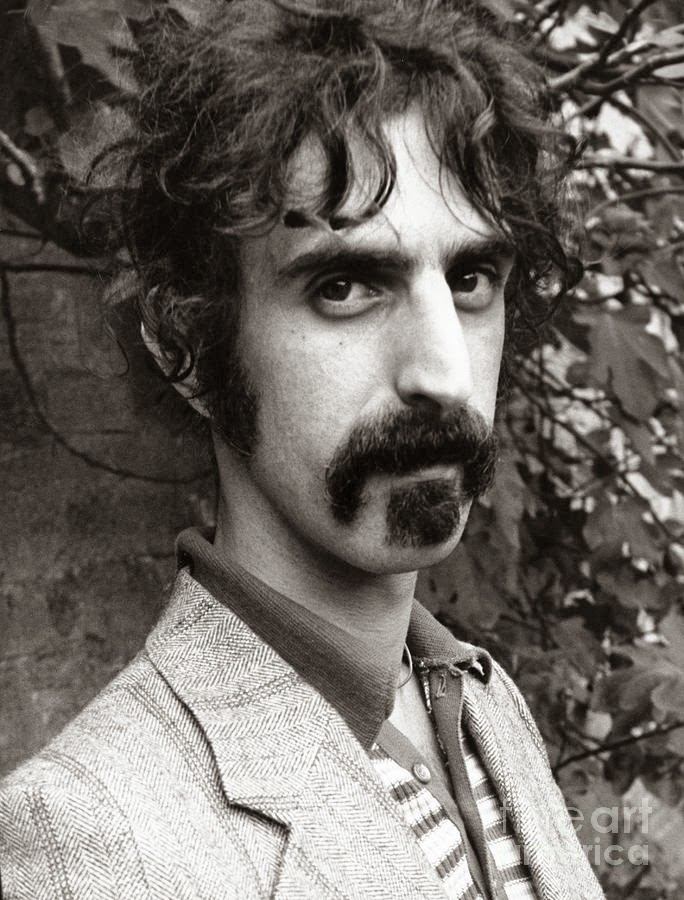
Visionary. Genius. Iconoclast. Provocateur. Madman. Mad scientist. Guitar hero. These are just some of the ways Frank Zappa has been described since he first burst onto music scene and the public consciousness in the mid-1960s. Impossible to pigeonhole and ridiculously prolific, FZ has always defied categorization. His canon can be intimidating to the uninitiated, and he had so many phases of his career that people can and do like, all, some, or none of his work. The music of Frank Zappa can seem impenetrable to the outsider, and he's rightly been mischaracterized as someone who writes "comedy" or "novelty" songs, who was needlessly vulgar (he was, sometimes), and "dangerous," but those who have an open mind, a sense of humor, and are willing to really pay attention to the music will find that most of the above labels do apply to Frank, and they will be richly rewarded.
Frank Zappa was born on December 21, 1940 and, after moving around with his family for a while, grew up and graduated from high school in the Los Angeles area. From a young age, he developed an interest in music, but not the typical rock and roll that other teenagers in the 1950s were going crazy over. Instead, Zappa had an interest in classical, jazz, avant garde, blues, and doo-wop music, all of which would eventually find their way into his subsequent career. After initially starting off on drums, he moved to guitar as a teenager, which is the instrument he would become famous for. After high school, Frank started working at a studio, eventually taking it over and dubbing it "Studio Z" before it closed down. He finally got with a serious band in LA in 1965; calling themselves the Mothers (later changing it to the Mothers of Invention at the insistence of their record company), he embarked upon the career that we all know and love.
I think from here that it's most convenient to discuss Zappa's career by phase, starting with the first one. This is his classic Mothers phase that ran from 1965 through 1969. One thing to note is that throughout his career, Frank had numerous different band line-ups. All of them were comprised of incredible musicians; they had to be in order to play the complex music he wrote. Many of them went on to successful careers after their tenure with him, such as Steve Vai, Terry Bozzio, George Duke, Adrian Belew, Mike Kenneally, and many others. All of his bands had their own unique identity and sound, both of which neatly corresponded with the particular phase Zappa was in. So, getting back to the original Mothers, this was the lineup that announced to the world that this wasn't your run of the mill American rock group of the mid-to-late 1960s. They certainly couldn't have burst onto the scene with a better debut than 1966's Freak Out!, which was a double album showcasing Zappa's eclectic style, with songs ranging from pastiche and parody to social comment and scathing teardowns, all of which would remain a staple of his entire oeuvre. Songs like "Trouble Every Day" ruminated on the 1965 Watts Riots in LA while the more avant garde and musique concrete songs, especially "Return of the Son of Monster Magnet" predated the Beatles' own forays into this with "Carnival of Light," "What's the New Mary Jane?" and "Revolution 9." The album was, in fact, a favorite of Paul McCartney's and one of his inspirations when coming up with the concept for Sgt. Pepper's Lonely Hearts Club Band. Further albums such as Absolutely Free, Uncle Meat, and 1968's brilliant piss-take of Sgt. Pepper, hippies, and the commercialization of the Summer of Love, We're Only In It For the Money, showed that Zappa and the Mothers were a band to which attention must be paid. However, internal struggles and band members bristling against Zappa's dictatorial control led to the disbanding of the group in 1969, giving way to phase two of his career. Beginning with the excellent Hot Rats album in 1969, Zappa began stretching his instrumental chops and embarked on a more theatrical phase of his career. A new band, fronted by Flo & Eddie (really Mark Vollman and Howard Kaylan, formerly of the Turtles who had to assume stage names for legal reasons) recorded and toured their version of an rock and roll vaudeville troupe, with extended song suites that told stories, like "Billy the Mountain," the hilarious "Groupie Routine," culminating with the 1971 film and album "200 Motels," about life on the road in a "typical rock band" (which they certainly were not!). An incident in 1971 almost killed Frank, however, when a deranged fan who was paranoid that the band were going to steal his girlfriend away rushed onstage during show at the Rainbow Theatre in London and shoved Zappa off the front, into the concrete orchestra pit below. His injuries resulted in a broken back and leg and a crushed larynx. The broken bones led to him being confined to a wheelchair for a while and the incorrect healing of his leg led to it being shorter than the other, resulting in a lifetime of back pain. The crushed larynx resulted in his voice being lowered by a third for the rest of his life, which is most pronounced on his first non-instrumental album after the injury, 1973's Overnite Sensation (which we'll return to later...).
During his convalescence, Zappa and his band recorded two instrumental big band rock/jazz albums, both of which are excellent: Waka/Jawaka and The Grand Wazoo.
Once he was fully healed, the next (and my favorite) phase began, with the aforementioned Overnite Sensation. Starting with this album and running all the way through 1979's Sheik Yerbouti, this was the closest Frank came to mainstream success. This was due to a more accessible sound, where he pared down the avant garde leanings while still retaining the ridiculous musical complexity he was known for. This is also the stretch where he really began to flex his muscles as a guitarist, with a soloing style and tone that was wholly unique. The apotheosis of this prowess was three albums of instrumentals focusing on his various guitar solo styles: the albums Shut Up N' Play Yer Guitar, Guitar, and Trance-Fusion. There are so many great albums during this stretch of the 1970s (and Frank was so damn prolific) that it's almost impossible to cover them all in a reasonable-length post, but my favorites are Overnite Sensation, Apostrophe('), One Size Fits All, Zappa In New York, Sheik Yerbouti, and Lather.
After Sheik Yerbouti, Frank continued his prolific pace with some excellent albums, like the scathing rock opera Joe's Garage and the complex music contained on the albums Studio Tan, Sleep Dirt, and Orchestral Favorites. However, it was also around this time when he seemed to get unnecessarily vulgar and puerile, and while his lyrics still meant something, he was often saying it in ways that were so obscene and juvenile that it got tiresome. I'm certainly not someone who gets offended easily, and being offended is not the reason I feel this way; it's just there, whereas previously Frank did it sparingly and cleverly for maximum impact, by this point it was his default position and just got boring after a while. The nadir of this approach is 1984's ThingFish album, which I've only been able to listen to a handful of times. It was also during this phase where Frank scaled back his relentless touring and focused instead on composing his classical pieces, mainly on a new piece of technology called the Synclavier. Honestly, there is very little of this period of his music that I listen to on a regular basis. The lone bright spots (for me) are the live recordings released that come from his penultimate tour in 1984 and his final tour in 1988, both of which featured perhaps his most technically accomplished band. However, this tour ended abruptly in acrimony due to band infighting and FZ's worsening health. He had been diagnosed with inoperable prostate cancer in the mid-1980s, but he worked until he literally couldn't work anymore. Frank passed away surrounded by his wife and kids at the age of 53 in December 1994. However, he left behind mountains of recorded music (he recorded EVERYTHING), much of which has been released since his death and is quite good. A lot of this is live music, and on a good night, Frank and his band were unstoppable. He also encouraged audience participation, making the concerts truly interactive. They look and sound like they were a blast and it's one of my regrets that I was born too late to ever see him live.
Beyond his writing, guitar playing, and relentless productivity, FZ was also a pioneer as a producer, inventing and developing several studio techniques that led the way to wholly unique and interesting sounds and which are now taken for granted. His extensive use of overdubbing and varispeeding allowed him to make clarinets and saxophones sound like string symphonies and various percussion overdubs to sound like monstrous drum kits. He also created and developed a technique he called "xenochrony," where he would lift passages from live performances, drop them onto a reel of studio tape, and build entirely new songs around them. In most cases, it was a guitar solo from one of his songs that he would lift, put onto a new tape, and build an entirely new song around. If this sounds daunting, it is...think of the different time signatures and keys that a single guitar solo track would be played in. It's a testament not only to Frank's genius but the skill of his band members that they could play what he wrote so well that the songs sound fully formed and cohesive. Most of the Joe's Garage album was constructed this way, as well as the song "Rubber Shirt" from Sheik Yerbouti, which was put together by taking a drum track from one live song and a bass guitar track from a totally different song and blending them together. Different time signatures and rhythms, but it worked. FZ was also the master of introducing what he called Conceptual Continuity into all of his albums, where everything he ever recorded was somehow connected to what he'd done before and what he had yet to do. This was done via musical passages, vocal melodies, lyrics, in-jokes, and album artwork and has led fans to spend years digging for every link they can possibly find between songs and albums.
Despite the public perception of Frank Zappa as a musical mad scientist, from everything I've read and heard about him, he was a fairly normal guy (relatively speaking). A lifelong cigarette smoker, he hated drugs, having admitted to trying pot a few times in the 1960s but disliking it, and he never touched any illegal substances. He strongly discouraged his band members from doing drugs, although he certainly used some of their road exploits as fodder for his songs (see: 200 Motels). He was married to the love of his life, Gail Zappa, for nearly 30 years until his death, and they had four children (Moon, Dweezil, Ahmet, and Diva). He had an intense dislike of organized religion and the education system and politically, he was a hardcore libertarian. He hated both Democrats and Republicans equally and believed in small government, personal freedom, and self-sufficiency. He was also an ardent anti-censorship advocate, famously testifying before Congress in the mid-1980s.
So how did a normal middle-class kid in New England become such a big FZ fan? I had heard a few Zappa songs as a kid, such as "Montana" and "Don't Eat the Yellow Snow," but it wasn't until I started high school in 1993 and a friend of mine played me a tape of Overnite Sensation that I was hooked. It was also around this time when one of the guitar magazines I routinely read had a multi-page cover feature on FZ and his playing, which led me to explore his discography and start buying all of his albums. As a teenager learning guitar, playing trumpet in jazz and symphonic bands at school, and trying to absorb as much music of any genre as I could, it was a revelation. There was always something new to discover, and even now in my mid-30s, I find new musical quotations, conceptual continuity clues, and interesting aspects to his compositional and instrumental styles when I listen to his music. Certain songs that I must have heard hundreds, if not thousands of times still make me laugh out loud when I hear them now, and much of his social commentary has not only not dated, but is as applicable now as it was then. The targets of his words may no longer be with us, but the words themselves still resonate. People typically have two opinions on Frank Zappa: they either love him or hate him. All that I would ask is, if you want to give him a try, is to have an open mind and pay attention to the whole package...the music and the words. He bristled against the notion many held that he only wrote "comedy music" (even sending himself up on 200 Motels regarding this). He was funny, yes, but he was a true musical visionary, genius, and a one of a kind talent that the world sorely misses. He died too young, but he left such a staggering body of work, both in terms of quality and quantity, that those interested will continue to discover, explore, and enjoy it for decades to come.
If you're new to FZ and want any advice on where to start discovering his music, or if you're a big fan like me and want to talk about his music, let's talk in the comments section below!